
Rising Dollar Also Hits Tourism
Rising Dollar Also Hits Tourism
Although there is a general belief that as the dollar increases, tourism revenues also increase, it is stated that as the dollar increases, Türkiye becomes a cheaper tourism country and tourist spending decreases.
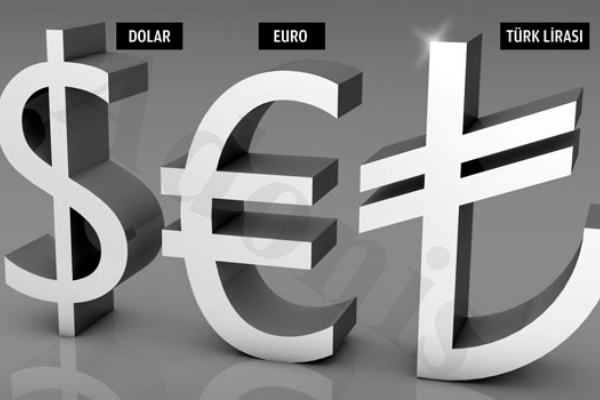
In 2008, the appreciation of the lira and the decrease in the value of the dollar caused incoming tourists to spend more. The 30 million 979 thousand tourists that Turkey hosted in 2008 left a total income of 25 billion 415 million dollars.
However, since 2009, the lira started to lose value again, although the number of tourists increased to 32 million in 2009, tourism revenue decreased to 25 billion dollars. Because the dollar gained value, foreigners started to have cheaper holidays.
The average dollar exchange rate continued to remain at a high level of 1 lira and 50 kuruş in 2010. Although the number of tourists increased to 33 million 27 thousand, tourism income in 2010 decreased to 24 billion 930 million dollars.
During the next three years, the dollar exchange rate did not increase much.
The US dollar, which was traded at an average of 2 lira and 18 kuruş in 2014, increased to 2 lira 72 kuruş with a sharp attack in 2015. The impact of this attack on tourism revenues was also harsh.
The crisis, which broke out in November 2015 when Turkey shot down a Russian warplane, hit Turkish tourism in 2016. As if this was not enough, the average value of 1 dollar increased to 3.02 in 2016.
While the dollar's rise above 3 lira was demoralizing, the tourism sector became even cheaper with the effect of the tourist embargo imposed by Russia.
In 2017, the dollar exchange rate reached a new peak, reaching an average of 3 lira and 65 kuruş. And the increase in the dollar caused tourism to bottom out.
By 2018, 1 US dollar increased to 4 lira and 90 kuruş.
-A truly depressing trend.
Former Minister of Tourism and former President of the Association of Turkish Travel Agencies (TURSAB) Bahattin Yücel: Türkiye is becoming cheaper for foreigners who earn in foreign currency. If this economic policy continues, we expect serious shocks at the end of the season. Aircraft companies and some large accommodation companies used serious foreign currency loans. They are all in trouble. With these exchange rates and this tax system, it is very difficult for businesses to engage in commercial activities in Turkey. "We need a miracle," he said.
In other words, although tourists flow, foreign currency does not flow. As the national currency loses value, goods and especially the service sector become cheaper for foreigners. Considering 2008, when the Turkish Lira was at its strongest, the depreciation in the last 10 years has reached 335 percent.